Some Sources of Information about Military Units
The U.S. Army has a long history of its regiments, and a rich history of its infantry divisions, armored divisions, and many more. The Marine Corps, being much smaller, has much less volume of history but equally as rich. The Air Force, being much younger, has less unit history but great depth for the years of its existence, including its predecessor organizations. The Navy has a fabulous history, but is less organized around permanent organizational units and so its history is primarily that of its ships. (Fans of the famous Task Force 58 might disagree, but even that was a temporary unit, rather than one having extensive history.)
Web Sites of Military Units
Many military organizations and their respective veterans’ organizations have their own web sites, with varying amounts and types of information. Following are a couple, and I will add more as I get permissions to link.
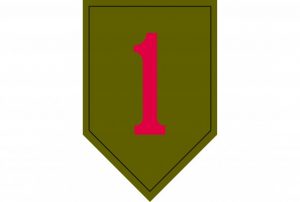
First Infantry Division This Division is the Army’s oldest standing division, with a history dating back to World War I and being one of the first to land at Normandy on D-Day. Its veterans group is The Society of the 1st Infantry Division, and their web site is Society of the 1st Infantry Division
First Marine Division This organization has a distinguished history. In World War II it was the first American division-sized unit to see action, at Guadalcanal, and finished at Okinawa. It’s official site can be found at 1st Marine Division
Second Infantry Division This outfit has a long history, during World War II and Korea, among others. The site for its veterans’ organization is 2nd Infantry Division
Sixth Infantry Division This group saw much action in the Philippines during World War II. The site for its veterans’ organization is 6th Infantry Division
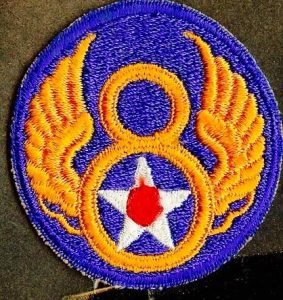
91st Bomb Group Many Army Air Force units were stationed in England during World War II as part of the 8th Air Force. Several have good web sites to honor and support their veterans. A fine example is that of the 91st Bomb Group (Heavy). Their web site is 91st Bomb Group
96th Infantry Division This Division was noted for its participation in the battles of Leyte (Philippines) and Okinawa during the last part of World War II. A site honoring its veterans is the Deadeyes site
Some Printed Sources
The following is not a systematic collection of sources, but rather a “bunch” as I have collected and used them.
Revolutionary War
An excellent source of information about the units of the American (Continental) Army in the American Revolution is “The Continental Army” by Robert K. Wright, Jr. It was published by the Army’s Center of MIlitary History in 1989. It is part of the Army Lineage Series and describes the various regiments and their participation in the war. It has never been widely available in commercial book stores, but is still available from the U.S. Govenment Printing Office Bookstore (accessible on line).
Civil War
Probably still the most widely used authoritative source of information about the Union Army units in the Civil War is Dyer’s Compendium. It was compiled by Frederick W. Dyer in the years following that war. It is still available in hard copy, but is generally pretty pricey. It is also available in CD form. It has a wealth of information about the Civil War, including much information about the Confederate units as well.
World War I
The U.S. Army has published an extensive series of books about its organization in World War I, Titled Order of Battle of the United States Land Forces in the World War. This is also from the Army’s Center of Military History and not available in commercial book stores. It is in a total of five volumes. It doesn’t seem to be available in the U.S. Government Printing Office Bookstore, but the volumes may possibly be obtained through the used book market.
Another, now rather rare, source of information about the Army in World War I is “Final Report of Gen. John J. Pershing”, published by the Army in 1919. In addition to a narrative history of the war from Gen. Pershing’s perspective, it has a number of foldout pages that contain maps and, of interest here, some detailed charts of the units that made up the Army’s order of battle in Europe. I stumbled onto a copy in a rare book store in about 1995, but I’m sure it would be rather hard to find these days.
World War II
Army
The Army has published an extraordinarily extensive list of Army (ground force) units that participated in World War II and the Korean War. It is Department of the Army Pamphlet 672-1, Unit Citation and Campaign Participation Credit Register, and is available on the Internet at DA-Pam 672-1 . However, if you wish to print it, be warned that it runs over 500 pages (of small print.)
Air Force
The Air Force has published two excellent volumes of the Army Air Corps (Air Force) units of World War II. They are:
Combat Squadrons of the Air Force, World War II, Edited by Maurer Maurer. First published in 1969 and reprinted in 1982 This gives a brief history, stations, types of aircraft used, insignia, assignments to higher echelon organizations, and campaign credits and decorations of the various squadrons.
Air Force Combat Units of World War II, History and Insignia, Edited by Maurer Maurer. This work covers the organizations above the squadron level. It describes the history, squadrons, stations, commanders, campaigns and decorations of these higher level units.
Both of these volumes may still be available through the used book market.
The Army Lineage Series
The Army’s Office of Military History has published a series of volumes that are collectively called Army Lineage Series. In addition to the one about the Revolutionary War cited above, it has several others, each of which focuses on the units (regiments, etc.) of a particular branch, such as the infantry or the field artillery. Each gives the historical lineage of each regiment or other unit, and contains an extensive narrative that gives a lot of related history. Many photographs and color plates of the units’ insignia are included. As with other publications of the military services, these were distributed by the Government Printing Office and were not generally available in commercial bookstores. They should be available through the used book market.
Defense Department web site
The Department of Defense’s own web site can be reached at The DoD Site
SERVICESERVICE
NUMBER
TYPE
SUBTYPE
STATUS
NICKNAME
MOTTO
INSTALLATION
REMARKS
ORIGINDATE
A
0026
Regiment
Infantry
–
–
Palmam Qui Meruit Ferat
–
Motto means Let Him Bear the Palm Who Has Won It
WW I –
Part of 2nd Infantry Brigade
WW II
Part of 1st Infantry Division
Nov 1942, Operation Torch, invasion of North Africa, COL A. N. Stark
Jul 1943, Operation Husky, invasion of Sicily, COL John W. Bowen
Aug 1943, at Mt. Vassillio, Sicily
June 6, 1944, Operation Overlord, invasion of Normany, part of 1st Infantry Division, but attached to the 29th Infantry Division for the landing.
1944, Siegfried Line Campaign
Dec 1944-Jan 1945, Ardennes Campaign Battle of the Bulge, COL John F. R. Seitz
Nov 19 1944, near Schevenhutte, Germany
Dec 20-21 1944, near Dom Butgenhach, Belgium
Vietnam War–
A
0027
Regiment
Infantry
–
The Wolfhounds
Nec Aspera Terrent
–
Motto means Frightened By No Difficulties
Philippine Insurrection
May 2 1902, Bayong, near Lake Lanao Mindanao Philippines
Jun 9 1903, Fort Pitacus, Lake Lanao, Mindanao, Philippines
WW II
Part of 25th Division
1943, Guadalcanal Campaign, COL William A. McCuggoch
1945, Philippines
Korean War
Part of 25th Infantry Division
Arrived Korea Jul 10, 1950, LCOL John Michaelis
Sep 19 1950, near Chindong-ni Korea
Nov 27 1950, near Ipsok, Korea
Jul 1951, Sosa, Korea
Feb 7 1951, near Soam-ni Korea
Sep 12 1951, near Kumhwa Korea
Sep 6 1952, near Satae-ri, Korea
Vietnam War
Vietnam 1966-68, qt least, part of 25th Infantry Division
Aug 29 1968, Tay Ninh Province Vietnam–
A
0028
Regiment
Infantry
–
See Notes
Vincit Amor Patriae
–
Nickname is Lions of Cantigny
Motto means Love of Country Conquers
WW I –
Part of 2nd Infantry Brigade
WW II
Jun-Aug 1944, Normandy Campaign, part of 8th Infantry Division
1944, Siegfried Line Campaign
Jul 1951, part of 8th Infantry Division, Fort Jackson
Vietnam War
Part of 1st Infantry Division
Mar 5 1866, Don Dien Lo Ke Vietnam
Feb 16 1969, Binh Duong Province Vietnam–
A
0029
Regiment
Infantry
–
–
We Lead the Way
Fort Benning
WW I -, Part of 34th Infantry Brigade
Jun 1950, Okinawa
1996, Infantry School–
A
0030
Regiment
Infantry
–
–
Our Country, Not Ourselves
–
WW I –
Part of 6th Infantry Brigade
WW II
Part of 3rd Infantry Division
Jan 30 1944, Carano, Italy
Apr 23-24 1944, near Padiglione, Italy
May 23 1944, Ponte Rotto, Italy
Sep 17 1944, near Radden, France
Dec 16 1944, near Kaysersberg, France–
A
0031
Regiment
Infantry
–
Polar Bears
Pro Patria
–
Motto means For Country
Also known as America’s Foreign Legion
Constituted Jul 1, 1916
Organized at Fort William McKinley in Philippines August 1, 1916
WW I
Siberia 1918 Campaign
Siberia 1919 Campaign
In Siberia into 1920
Assigned 10/22/21 to Philippine Division
Relieved 6/26/31 from Philippine Division
Assigned 1941 to Phipippine Division
Strength as of Jul 31 1941, 114 officers and 1986 enlisted men
WW II
Philippine Islands Campaign
Dec 41, stationed at Post of Manila
1941-42, part of Philippine Division in defense of Philippines, COL Charles L. Steel, then LCOL Jasper E. Brady. The only infantry regiment in the Philippines composed entirely of Americans.
1942, Bataan
Jan 42, Defense of Layac Junction, at entrance to Bataan
Jan 19-22 1942, Battle at Abucay Hacienda
Apr 6-9, in line east of Mount Samat. By Apr 8, regimental strength down to 160 men in line.
Surrendered 4/09/42 to Japanese 14th Army
Reactivated Kyonsang, Korea, 1/19/1946, as part of 7th Infantry Division
Korean War
Part of 7th Infantry Division
1950
UN Defensive
Jun 1 1951, near Pachi-dong, Korea
UN Offensive, COL Allan D. MacLean
CCF Intervention
First UN Counteroffensive
CCF Spring Offensive
Jun 5 1951, near Hwach’on Myon Korea
Jul 1951, Hoengsong, Korea
UN Summer-Fall Offensive
Second Korean Winter
Korea, Summer-Fall 1952
Oct 14-15 1952, near Kumha Korea
Third Korean Winter
Korea, Summer 1953
Viet Nam War
4th Battalion, at least, in 196th Infantry Brigade
Counter-offensive, Phase I
Counter-offensive, Phase II
Tet Offensive
Jun 7 1970, Hiep Doc village
(Later campaigns not listed in source)
Decorations
Presidential Unit Citation, Luzon 1941-42, (1942)
Presidential Unit Citation, Bataan (1942)
Presidential Unit Citation, Defense of Philippines (1942)
Presidential Unit Citation, Chosin Reservoir (1953)
Presidential Unit Citation Hwachon Reservoir (1957)
Valorous Unit Award, Que Son-Hiep Doc (4th Bn) (1969)
Valorous Unit Award, Saigon (6th Bn) (1970)
Valorous Unit Award, Parrot’s Beak (6th Bn) (1971)
Naval Unit Citation Panmunjom (1957)
Philippine Presidential Unit Citation Dec 7 1941 to May 10 1942 (1950)
Republic of Korea Presidential Unit Citation, Inchon (1951)
Republic of Korea Presidential Unit Citation, Korea (1956)–
A
0032
Regiment
Infantry
–
–
–
–
WW I –
Part of 32nd Infantry Brigade
WW II
Part of 7th Infantry Division
May 26 1943, Attu, Aleutians
Apr-Jun 1945, Operation Iceberg, Okinawa Campaign
Korean War
Part of 7th Infantry Division
1950, Korea
Nov 27-Dec 1 1950, near Hagaru-ri, Korea
Jul 1951, Hoengsong, Korea–
A
0034
Regiment
Infantry
–
–
Toujours en Avant
–
Motto means Always Forward
WW I –
Part of 14th Infantry Brigade
WW II
Part of 24th Infantry Division
Oct 21 1944, Pawig, Leyte, Philippines
Nov 3 1944, near Capoocan, Leyte, Philippines
1945, Philippines (Mindanao)
Korean War
1950, Part of 24th Infantry Division
Arrived Korea from Japan Jul 2-3 Jul 1950, COL Jay B. Loveless (Army history says Lovless)
Col Loveless relieved by COL Robert R. Martin 7/7/50.
COL Martin killed 7/8/50. LCOL Robert L. Wadlington, Regimental Executive Officer, in temporary command.
Col Charles E. Beauchamp assumed command approximately Jul 16 1950
Jul 1951, Camp Zama–
A
0035
Regiment
Infantry
–
The Cacti
Take Arms
–
WW I -, Part of 36th Infantry Brigade
WW II
Part of 25th Infantry Division
1943, Guadalcanal Campaign, COL Robert B. McClure
Jan 10 1943, Mount Austin, Guadalcanal
Feb 7 1945, near Lupao, Luzon, Philippines
Korean War
Part of 25th Infantry Division
Arrived Korea Jul 13-15 1950, COL, Henry G. Fisher (per South to the Naktong), or COL John Fisher (per Ridgway Duels)
Sep 19 1950, near Saga, Korea
Jan 1951, COL William Kelleher
May 20 1951, near Seoul Korea,
Jul 1951, Sosa, Korea
Sep 7 1951, near Pyongyang, Korea
Vietnam War
Part of 25th Infantry Division
Mar 12 1967, Kontum Province Vietnam–
A
0036
Regiment
Infantry
–
–
Deeds Not Words
–
WW I –
Part of 23rd Infantry Brigade–